


Barter Trade
المقايضة (تبادل السلع بالسلع)
المقايضة (تبادل السلع بالسلع)
Cross-Commodity Barter & Counter-Trade Desk
Bridging Global Markets Through Multi-Commodity Trade & Secured Barter Solutions
Facilitating cross-border commodity flow across Eurasia and the Gulf Cooperation Council (GCC) through agile counter-trade, robust logistics, and independent verification
Energy and Petroleum Derivatives

Polymers, PP/PE granules, export-grade bitumen, petroleum coke, base oils
Minerals and Metals

Sulfur, steel ingots, billets, copper cathodes, copper and iron concentrates, lead and zinc
Agriculture and Food Industry

Grains, oilseeds, legumes, textile fibers/cotton, processed products, and premium/freeze-dried dried fruits and nuts
Specialized Industrial Goods

Advanced construction materials, heavy textiles, and mutually agreed counter-trade items
1
1- LOI / Product Data Sheet:
Detailed laboratory analysis, international tariff code (HS Code), proposed tonnage, origin, and packaging of the foreign party's goods (e.g., polymers, fertilizers, metals, or grains).
2- Regulatory Check:
Verifying whether the product in question is prohibited from entering the destination country and determining if it requires quotas, mandatory standards, or health/agricultural permits.
3- Dollar-Value Balancing of Shipments:
Determining the total value of both shipments based on a transparent reference formula
(e.g., Platts for petroleum derivatives, LME for metals, or the official export invoice).
Calculating the balance:
Dollar value of the Holding’s export goods = Dollar value of the counterparty’s import goods.
4- Pre-sale / Exit Strategy:
Prior to final signing, the specifications of the incoming goods are presented to wholesale buyers and domestic factories, and agreements for cash/Rial-based purchases are secured to eliminate the risk of inventory stockpiling.
Detailed laboratory analysis, international tariff code (HS Code), proposed tonnage, origin, and packaging of the foreign party's goods (e.g., polymers, fertilizers, metals, or grains).
2- Regulatory Check:
Verifying whether the product in question is prohibited from entering the destination country and determining if it requires quotas, mandatory standards, or health/agricultural permits.
3- Dollar-Value Balancing of Shipments:
Determining the total value of both shipments based on a transparent reference formula
(e.g., Platts for petroleum derivatives, LME for metals, or the official export invoice).
Calculating the balance:
Dollar value of the Holding’s export goods = Dollar value of the counterparty’s import goods.
4- Pre-sale / Exit Strategy:
Prior to final signing, the specifications of the incoming goods are presented to wholesale buyers and domestic factories, and agreements for cash/Rial-based purchases are secured to eliminate the risk of inventory stockpiling.
Feasibility & Commodity Match
2
Contract & Financial Security
1- Barter/Counter-Purchase Master Agreement:
Comprising two interconnected sections: the sale of Good A and the purchase of Good B, linked by mutual reference (Back-to-Back Contract).
-Specifying delivery terms in accordance with Incoterms 2020 (preferably delivery at rail borders or neutral ports: FCA, CPT, CFR).
-Stipulating international arbitration and force majeure clauses.
2- Risk Mitigation:
-Issuance of a Performance Bond (PB)—typically valued at 5% to 10% of the contract value—by the respective parties.
-In the absence of direct banking channels, mandating shipment in partial lots such that the value of each lot does not exceed the tolerable risk threshold.
3-Inspection Agreement:
Incorporating a mandatory clause for quality and quantity inspection at the point of origin and the exit border, to be conducted by a reputable international firm (e.g., SGS).
Comprising two interconnected sections: the sale of Good A and the purchase of Good B, linked by mutual reference (Back-to-Back Contract).
-Specifying delivery terms in accordance with Incoterms 2020 (preferably delivery at rail borders or neutral ports: FCA, CPT, CFR).
-Stipulating international arbitration and force majeure clauses.
2- Risk Mitigation:
-Issuance of a Performance Bond (PB)—typically valued at 5% to 10% of the contract value—by the respective parties.
-In the absence of direct banking channels, mandating shipment in partial lots such that the value of each lot does not exceed the tolerable risk threshold.
3-Inspection Agreement:
Incorporating a mandatory clause for quality and quantity inspection at the point of origin and the exit border, to be conducted by a reputable international firm (e.g., SGS).
3
Export Formalities
1- Registration in the Comprehensive Trade System (NTSW):
Registering the declaration (Koutazh) under the procedure: "Export against Import (own account or transfer to a third party)."
2- Loading, transport, and export clearance procedures for the Idrisco shipment:
-Cargo inspection by an inspection company (issuance of an Inspection Certificate).
-Customs declaration at the point of origin, sealing of the cargo, and transport to the exit border (e.g., Sarakhs, Incheh Borun, Bandar Abbas, etc.).
3- Issuance of shipping documents and the export permit:
Following the physical crossing of the border, the final export permit (Green Koutazh) is issued by Customs and recorded in the system.
Registering the declaration (Koutazh) under the procedure: "Export against Import (own account or transfer to a third party)."
2- Loading, transport, and export clearance procedures for the Idrisco shipment:
-Cargo inspection by an inspection company (issuance of an Inspection Certificate).
-Customs declaration at the point of origin, sealing of the cargo, and transport to the exit border (e.g., Sarakhs, Incheh Borun, Bandar Abbas, etc.).
3- Issuance of shipping documents and the export permit:
Following the physical crossing of the border, the final export permit (Green Koutazh) is issued by Customs and recorded in the system.
4
Physical Exchange
1- Arrival of the counterparty's shipment at the exchange point:
Arrival of the counterparty's cargo (railcars, containers, or vessels) at the Special Economic Zone, border station, or customs area specified in the contract.
2- Inspection & Acceptance:
A third-party inspection team (such as SGS) weighs, analyzes, and assays the shipment, and provides written confirmation of its conformity with the analysis specified in the contract.
3- Title Transfer:
Simultaneous exchange of cargo ownership documents (release bills of lading, manifests, and final invoices) based on the partial delivery formula.
Arrival of the counterparty's cargo (railcars, containers, or vessels) at the Special Economic Zone, border station, or customs area specified in the contract.
2- Inspection & Acceptance:
A third-party inspection team (such as SGS) weighs, analyzes, and assays the shipment, and provides written confirmation of its conformity with the analysis specified in the contract.
3- Title Transfer:
Simultaneous exchange of cargo ownership documents (release bills of lading, manifests, and final invoices) based on the partial delivery formula.
1- Import Order Registration Using Export Declaration Proceeds:
Register the import order in the Comprehensive Trade System by selecting the currency sourcing option: "Currency derived from own exports or exports by others."
2- Linking the Export Declaration (Cottage) to the Import Declaration:
Locking the export declaration number (for carpets/products) within the currency source section of the Customs system.
3- Final Customs Clearance at the Port of Entry:
Payment of standard customs duties and levies, as well as Value Added Tax (VAT), followed by the issuance of the import clearance certificate (Green Sheet).
4- Automatic Closure of the Foreign Currency Repatriation Obligation:
By automatically matching the values of the export and import declarations within the system, the Central Bank settles the holding company's export currency repatriation obligation in full (100%) and declares it closed.
Register the import order in the Comprehensive Trade System by selecting the currency sourcing option: "Currency derived from own exports or exports by others."
2- Linking the Export Declaration (Cottage) to the Import Declaration:
Locking the export declaration number (for carpets/products) within the currency source section of the Customs system.
3- Final Customs Clearance at the Port of Entry:
Payment of standard customs duties and levies, as well as Value Added Tax (VAT), followed by the issuance of the import clearance certificate (Green Sheet).
4- Automatic Closure of the Foreign Currency Repatriation Obligation:
By automatically matching the values of the export and import declarations within the system, the Central Bank settles the holding company's export currency repatriation obligation in full (100%) and declares it closed.
5
Clearance & Regulatory Settlement
1- Delivery of cargo to the end buyer or domestic industries:
Direct transfer of the cleared shipment from the border/port to the end buyer’s warehouse in Iran, in accordance with the prior agreement (Phase 1).
2- Receipt of payment (Rials / Bank transfer):
Deposit of Rial funds into the Holding’s accounts, accompanied by an official statement and sales invoice.
3- Release of guarantees (Collateral Release):
Mutual cancellation of bank guarantees (Performance Bonds) or settlement of escrow accounts following full, defect-free approval by both parties.
Direct transfer of the cleared shipment from the border/port to the end buyer’s warehouse in Iran, in accordance with the prior agreement (Phase 1).
2- Receipt of payment (Rials / Bank transfer):
Deposit of Rial funds into the Holding’s accounts, accompanied by an official statement and sales invoice.
3- Release of guarantees (Collateral Release):
Mutual cancellation of bank guarantees (Performance Bonds) or settlement of escrow accounts following full, defect-free approval by both parties.
6
Liquidation & Settlement

Process Summary Chart
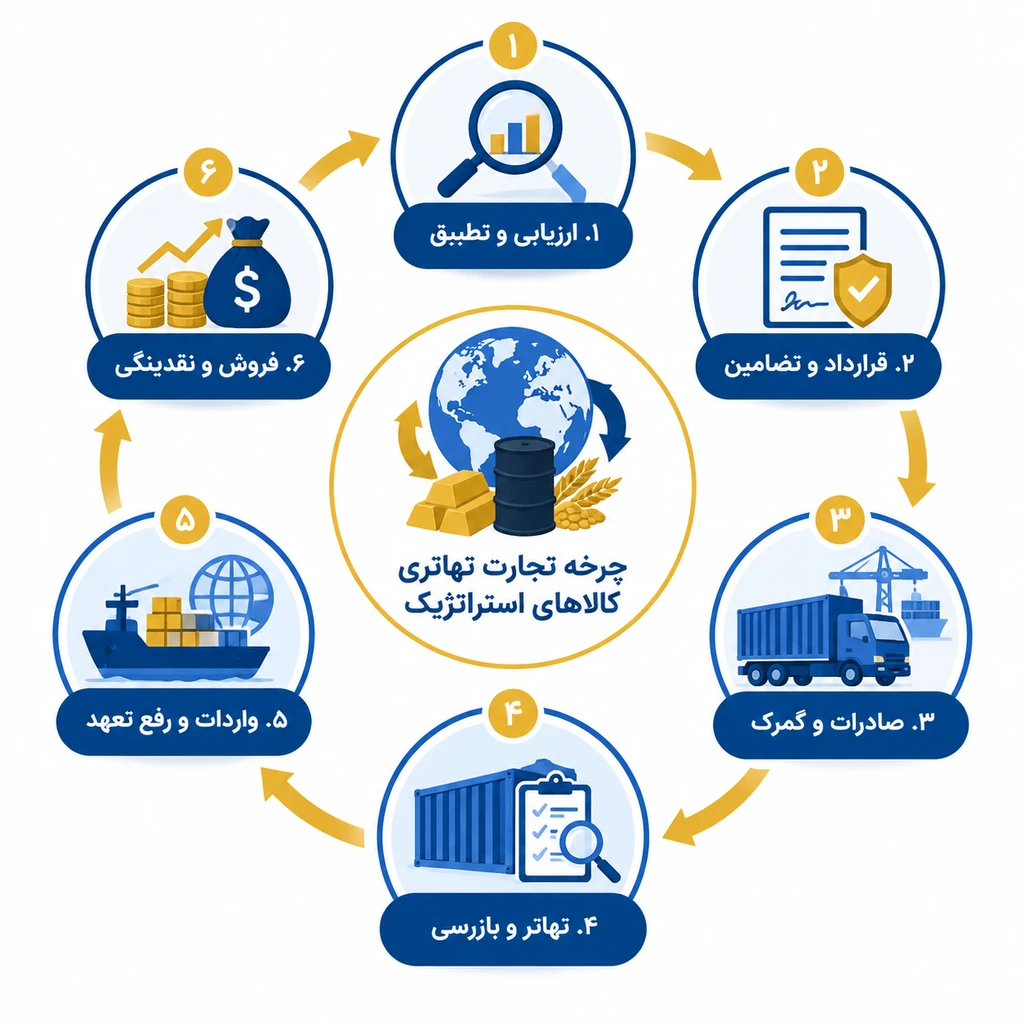
تجارت تهاتری کالاهای استراتژیک
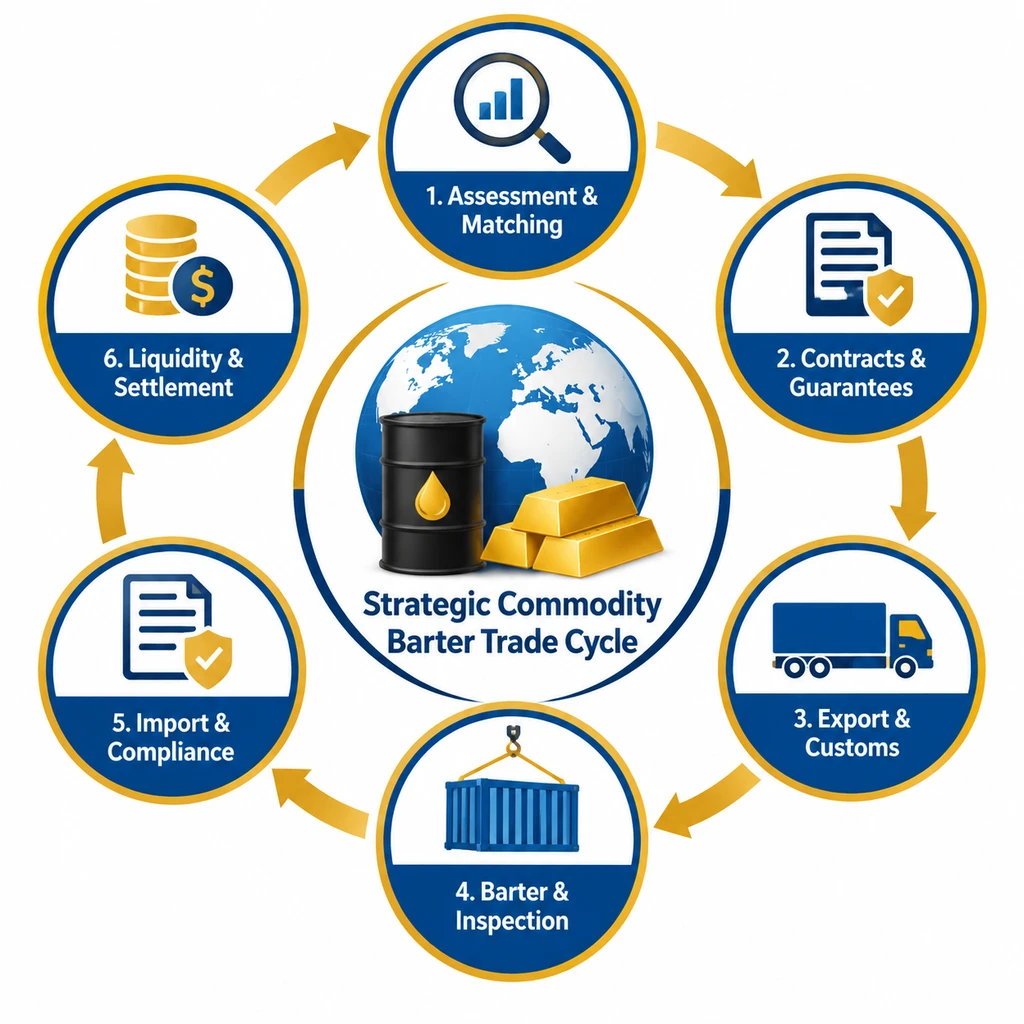
Strategic Commodity Barter Trade Cycle
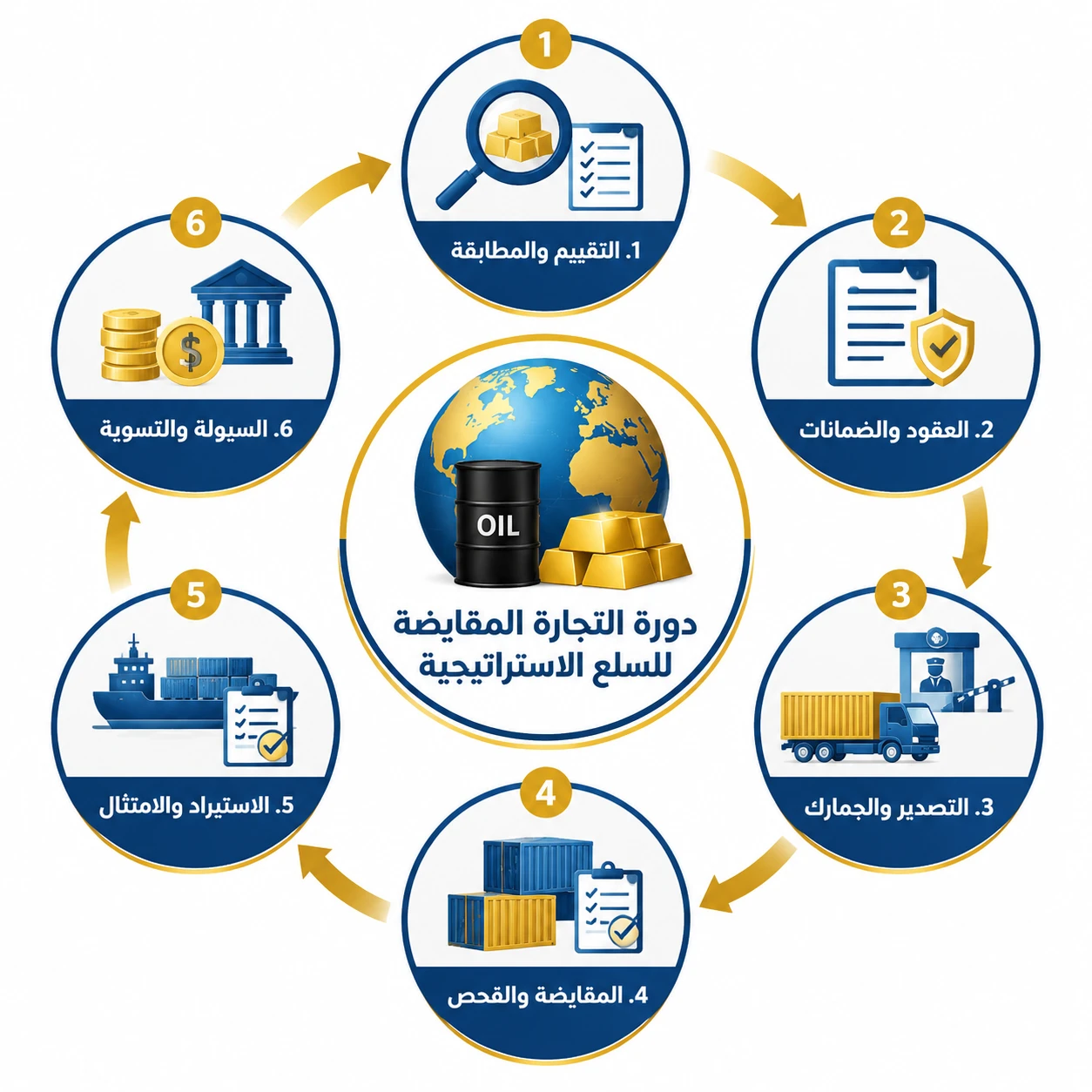
دورة التجارة المقايضة للسلع الاستراتيجية
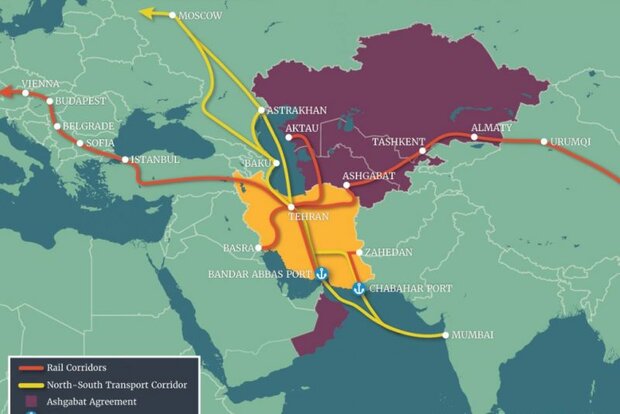
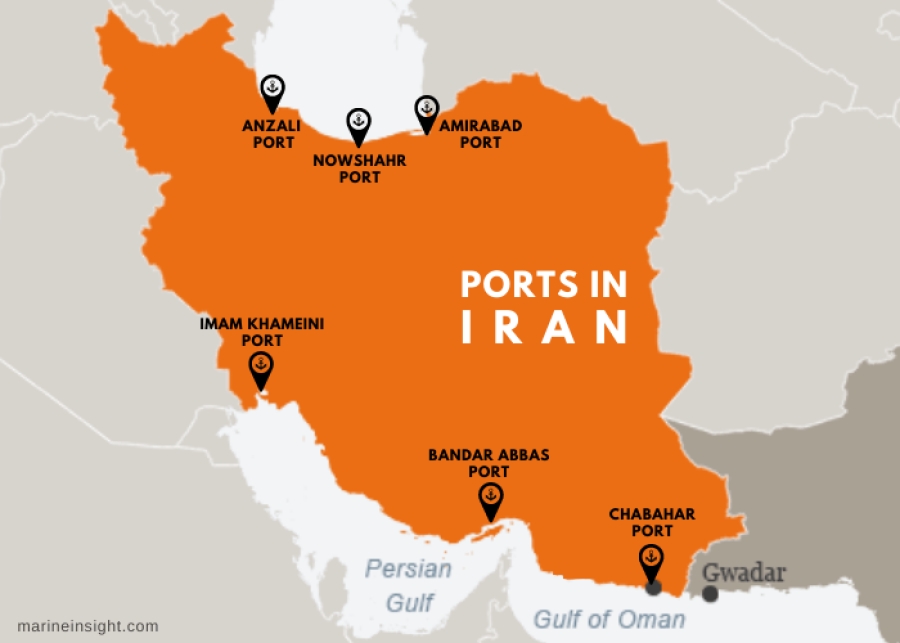
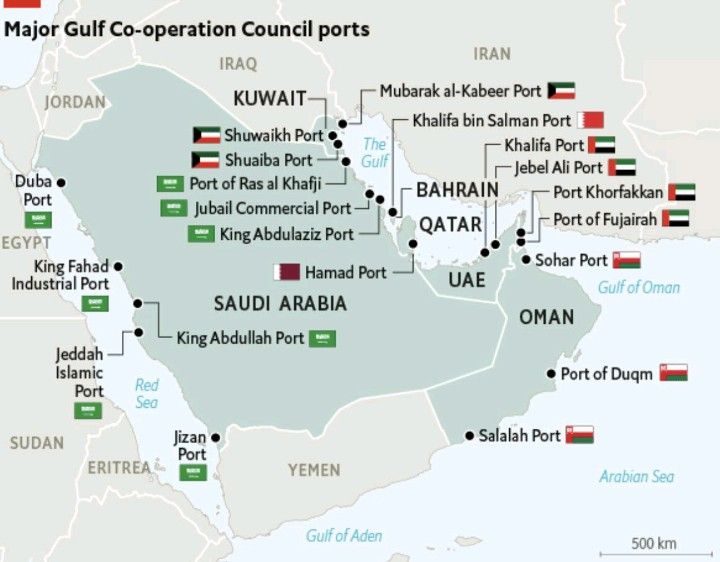
Cross-Border Corridors